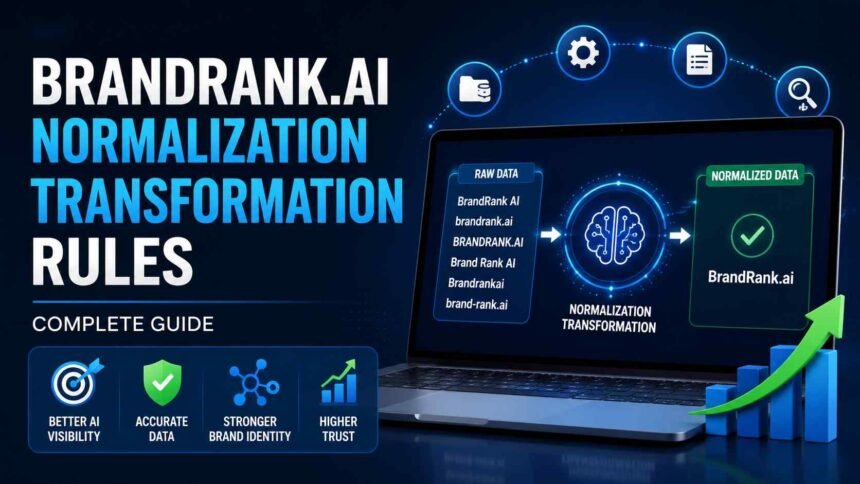
As AI search engines become more popular, businesses are looking for new ways to improve how their brand appears in AI-generated answers. One topic that has gained attention is brandrank.ai normalization transformation rules.
These rules refer to the methods used to standardize and organize brand-related data so that AI systems can understand it more accurately. Instead of treating different versions of the same brand as separate entities, normalization helps AI recognize them as one consistent brand.
For businesses, marketers, and SEO professionals, understanding canonical URLs is crucial. brandrank.ai normalization transformation rules can help improve brand visibility, reduce confusion, and create more accurate AI search results.
In this guide, we will explain everything in simple language, including how these rules work, why they matter, and the best practices to follow.
Why Normalization Matters in AI Search
Traditional search engines mainly rely on keywords and backlinks. AI-powered search platforms, including ChatGPT, go much deeper in analyzing brand data. They analyze entities, relationships, context, and structured information.
Imagine your company appears online in different ways:
- ABC Tech
- ABC Technologies
- ABC Tech Inc.
- ABCTech
A human can easily understand these names refer to the same business, which is crucial for AI answer accuracy. An AI model may not always make that connection unless the information is normalized.
Normalization helps AI systems recognize these variations as one brand, making search results more accurate.
Understanding Transformation Rules
Transformation rules are predefined methods that convert different types of data into a consistent format.
Some common examples include:
- Converting uppercase and lowercase letters into a standard format.
- Removing unnecessary punctuation.
- Expanding abbreviations.
- Standardizing company names.
- Cleaning duplicate records.
- Formatting URLs consistently.
These transformations make it easier for AI systems to process information without confusion, enhancing perplexity.
How BrandRank.ai Normalization Transformation Rules Work
Although every AI platform may have its own processing methods, normalization generally follows several important steps.
1. Data Collection
The platform gathers information from various trusted sources such as:
- Company websites
- Business directories
- Social media profiles
- Press releases
- News articles
- Product listings
The more reliable the sources, the better the final understanding of a brand.
2. Data Cleaning
Collected data often contains errors such as:
- Misspelled brand names
- Duplicate entries
- Broken URLs
- Missing information
- Outdated company details
Cleaning removes these problems before further analysis.
3. Standardization
This is where transformation rules become important for effective engine optimization.
For example:
| Original Data | Standardized Version |
|---|---|
| Open AI | OpenAI |
| MICROSOFT | Microsoft |
| Google LLC | |
| amazon.com | Amazon |
The goal is consistency across every dataset.
4. Entity Recognition
Modern AI systems, such as Gemini, identify whether different references point to the same company, product name, or organization.
For example:
- Apple Inc.
- Apple
- Apple Company
These can all be recognized as one entity when enough supporting information exists.
5. Relationship Mapping
After normalization, AI builds connections between:
- Brand and products
- Brand and services
- Brand and founders
- Brand and industries
- Brand and competitors
This creates a richer knowledge graph that improves AI-generated responses.
Benefits of BrandRank.ai Normalization Transformation Rules
Businesses can gain several advantages from proper normalization of their brand data.
Better AI Search Visibility: Consistent brand information, including accurate brand data, makes it easier for AI platforms to identify your business correctly.
Improved Data Accuracy: Normalization removes duplicate and inconsistent records, creating cleaner datasets.
Stronger Brand Identity: When your business appears consistently across websites, AI models develop greater confidence in your brand information.
Better Customer Experience: Users receive more accurate answers, reducing confusion caused by inconsistent business details.
Higher Trust: Reliable information helps both AI systems and customers trust your business, leading to better citation practices.
Common Data Problems Normalization Solves
Many businesses unknowingly create inconsistent information online, which can confuse AI systems like Gemini.
Examples include:
- Different phone numbers
- Old business addresses
- Multiple company names
- Incorrect website links
- Duplicate business profiles
- Inconsistent social media handles
Normalization helps fix these issues before they negatively affect AI search performance.
Best Practices for Better AI Recognition
If you want AI systems to understand your business correctly, follow these simple practices.
Use One Official Brand Name: Choose a single version of your company name and use it everywhere.
Keep Business Information Updated: Update your website, business listings, and social profiles whenever information changes.
Maintain Consistent URLs: Avoid using multiple versions of the same website whenever possible.
Publish Structured Content: Well-organized pages with clear headings help AI understand your content.
Build Authoritative Mentions: Get mentioned by trusted websites within your industry to strengthen your online authority and improve your analytics.
Monitor Your Brand: Regularly search for incorrect information and request corrections where necessary.
How AI Uses Normalized Data
Once information has been normalized, AI systems can:
- Answer brand-related questions faster
- Reduce duplicate knowledge
- Improve recommendation quality
- Generate more accurate summaries
- Connect products with their manufacturers
- Identify industry relationships
This creates a better experience for users searching with AI assistants.
Must Read:
Common Mistakes to Avoid
Many websites accidentally reduce their AI visibility by making avoidable mistakes.
Avoid:
- Changing your brand name frequently
- Using different logos across platforms
- Leaving outdated company information online
- Creating duplicate business listings
- Publishing inconsistent contact details
- Ignoring structured data
Consistency is one of the biggest factors that helps AI understand your brand and improves content readiness.
The Future of AI Data Normalization
AI search is evolving rapidly. Future systems are expected to become even better at understanding natural language, recognizing entities, and connecting related information.
Normalization will likely play an even larger role because AI models depend on clean and reliable data to generate trustworthy answers.
Businesses that maintain accurate, consistent, and well-structured information today will be better positioned for future AI search developments.
Must Read: AI Transformation Is a Problem of Governance: Complete Guide for Businesses
Final Thoughts
Understanding brandrank.ai normalization transformation rules is becoming increasingly valuable for anyone working in digital marketing, SEO, or online branding.
While the exact internal algorithms used by AI platforms may differ, the underlying principle remains the same: clean, consistent, and standardized data helps AI understand brands more accurately.
By keeping your business information consistent across every online platform, eliminating duplicate records, and publishing high-quality content, you can improve your chances of being represented correctly in AI-powered search experiences.
As AI continues to influence how people discover businesses online, investing in better data quality is no longer optional—it is an essential part of building long-term digital visibility.