Blogging has changed a lot in the last few years. Writers now have access to smart tools that can help with research, content planning, editing, and idea generation. One of the most popular tools today is ChatGPT.
If you are a blogger, content creator, or website owner, learning how to use ChatGPT for blogging can save time and improve your workflow. The key is knowing how to use it as an assistant instead of letting it replace your creativity.
In this guide, you will learn practical ways to use ChatGPT effectively while keeping your content original, human, and valuable for readers.
What Is ChatGPT?
ChatGPT is an AI assistant that can understand prompts and generate human-like text. It can help with brainstorming, outlining, research summaries, editing, and many other writing tasks.
For bloggers, it acts like a virtual writing partner that is available anytime. It can help you move from a blank page to a polished article much faster.
However, successful bloggers use ChatGPT wisely. They add personal experiences, opinions, examples, and unique insights that make content stand out.
Why Use ChatGPT for Blogging?
There are several reasons why more creators are using ChatGPT for blogging.
Saves Valuable Time
Coming up with ideas, creating outlines, and editing drafts often takes hours. ChatGPT can handle many of these repetitive tasks in minutes.
Helps Overcome Writer’s Block
Every blogger faces moments when ideas simply do not come. ChatGPT can suggest headlines, introductions, or new angles for your topic.
Improves Productivity
Instead of spending an entire day on one article, bloggers can focus on strategy, storytelling, and audience engagement while AI handles supporting tasks.
Supports Better Content Planning
You can generate topic clusters, keyword ideas, FAQs, and content calendars quickly.
How to Use ChatGPT for Blogging Effectively
The secret to successful ChatGPT for blogging is using it as a helper rather than an automatic content machine.
Here are practical ways to make the most of it.
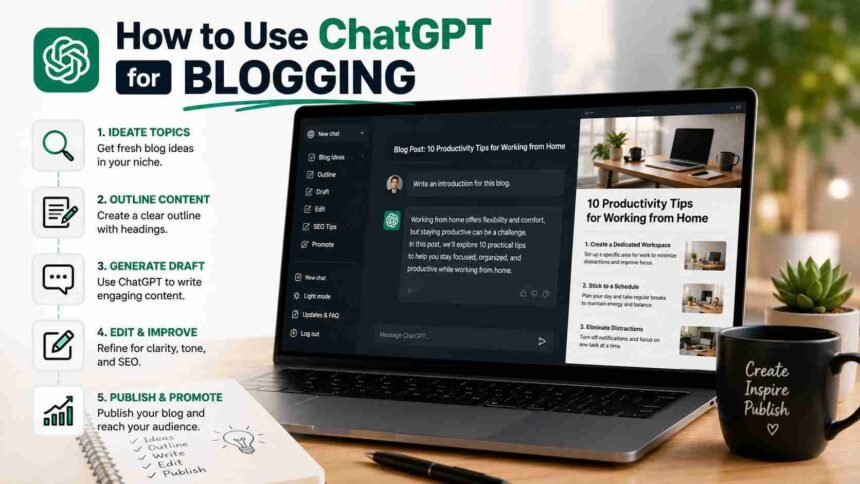
1. Generate Fresh Blog Ideas
Finding topics is one of the biggest challenges for bloggers.
You can ask ChatGPT questions like:
- Give me 20 blog ideas about AI productivity.
- Suggest beginner topics for electric vehicles.
- Create informational keywords related to digital marketing.
The tool can provide dozens of ideas within seconds.
You should still verify search demand using SEO tools, but ChatGPT is an excellent brainstorming partner.
2. Build Detailed Blog Outlines
A strong structure makes writing easier.
Instead of staring at a blank page, ask ChatGPT to create an outline with headings and subheadings.
For example:
“Create an SEO-friendly outline for a blog about ChatGPT for blogging.”
The generated framework can then be customized according to your audience and writing style.
This approach saves time and ensures better content organization.
3. Write Better Headlines
Your headline determines whether readers click or ignore your article.
ChatGPT can generate multiple headline variations, including:
- How-to headlines
- List posts
- Question-based titles
- Emotional headlines
- SEO-focused titles
Examples include:
- How to Use ChatGPT for Blogging Like a Professional
- 10 Smart Ways Bloggers Use ChatGPT Every Day
- The Ultimate Guide to ChatGPT for Blogging Success
Choose the one that matches your brand voice.
4. Speed Up Research
Research takes a significant amount of time.
ChatGPT can summarize concepts, explain industry terms, and provide background information.
Still, always verify important facts using trusted sources before publishing.
AI should assist your research process, not replace proper fact-checking.
5. Create First Drafts Faster
One of the biggest advantages of ChatGPT for blogging is faster drafting.
You can ask it to create introductory paragraphs, explain concepts, or expand specific sections.
However, avoid copying everything exactly as generated.
Instead:
- Add your own experiences.
- Rewrite sections in your voice.
- Include original examples.
- Insert personal opinions.
This keeps your content authentic and unique.
6. Improve Grammar and Readability
Editing is another area where ChatGPT shines.
You can use prompts like:
- Simplify this paragraph.
- Make this content easier for beginners.
- Improve readability without changing meaning.
- Correct grammar and spelling mistakes.
These small improvements can significantly enhance reader experience.
7. Generate FAQ Sections
FAQ sections help readers and can improve search visibility.
Ask ChatGPT to create common questions related to your topic.
For example:
- Is ChatGPT good for blogging?
- Can AI replace bloggers?
- How do bloggers use ChatGPT responsibly?
You can then answer these questions using your own expertise.
Best Prompts for ChatGPT for Blogging
The quality of your output depends on the quality of your prompts.
Here are some useful examples:
Content Ideas
“Suggest 30 low-competition blog topics about AI tools.”
Blog Outlines
“Create an SEO-friendly outline for beginners learning ChatGPT.”
Introductions
“Write an engaging introduction for a blog about AI productivity tools.”
Editing
“Rewrite this paragraph in simple English for a general audience.”
Headlines
“Generate 15 powerful headlines using emotional words.” Strong prompts lead to stronger content.
Common Mistakes to Avoid
Many beginners misuse AI tools. Avoid these common errors.
Publishing Without Editing
Never publish AI-generated text directly. Readers appreciate authenticity and personal experience.
Ignoring Fact Checking
Always verify statistics, dates, names, and technical information. Accuracy builds trust.
Overusing Keywords
Keyword stuffing damages readability. Use your primary keyword naturally throughout the article.
Losing Your Unique Voice
Your experiences, opinions, and storytelling are what make readers return. AI should support your voice, not replace it.
Can ChatGPT Replace Human Bloggers?
The short answer is no.
AI tools are excellent assistants, but people still connect with human stories, emotions, experiences, and perspectives.
Readers want authenticity.
Successful bloggers combine technology with creativity. They use AI to save time while adding genuine value through personal insights. That combination creates content that performs well and builds long-term trust.
Tips to Make AI-Assisted Blogs Feel Human
If you want your content to feel natural, follow these simple practices.
- Share personal experiences whenever possible.
- Use conversational language.
- Add examples from real life.
- Include opinions and recommendations.
- Break long paragraphs into smaller sections.
- Avoid robotic wording.
- Edit every sentence carefully.
These habits make a huge difference.
Must Read: How to Use ChatGPT for Beginners: The Complete Easy Guide
The Future of Blogging with AI
AI tools will continue becoming more powerful, but human creativity will remain essential. The future belongs to creators who know how to combine efficiency with originality.
Learning ChatGPT for blogging today gives you an advantage. It helps you produce better content, maintain consistency, and spend more time focusing on your audience.
The goal is not to let AI do everything. The goal is to work smarter while keeping your unique voice at the center of your content.
Final Thoughts
Using ChatGPT for blogging can transform your content workflow. It helps with brainstorming, outlining, editing, research, and productivity.
But the real magic happens when human creativity meets intelligent tools.
Treat ChatGPT as your writing assistant, not your replacement. Add your experiences, opinions, and personality to every article.
When used responsibly, it becomes one of the most valuable tools in a blogger’s toolkit.