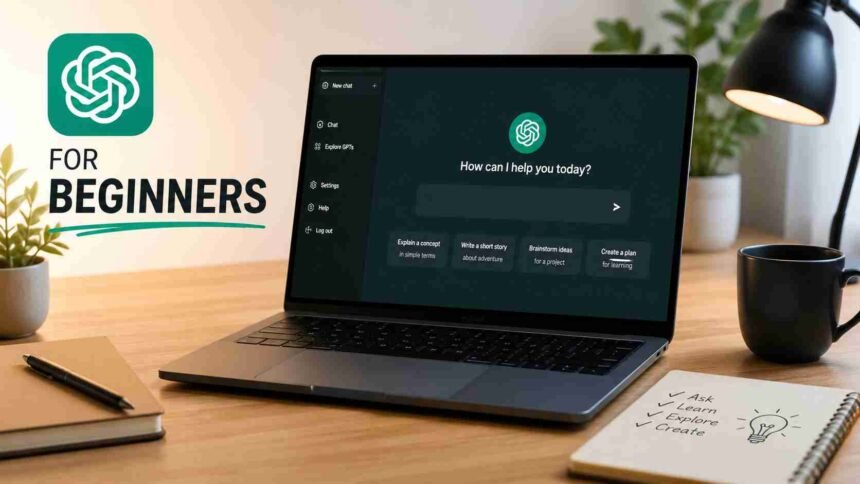
Artificial intelligence is changing the way people work, learn, and create. One tool that has become extremely popular is ChatGPT. If you are new to it, this guide on ChatGPT for beginners will help you understand everything in a simple and practical way.
You do not need technical knowledge or coding skills. Whether you are a student, freelancer, business owner, or someone who is simply curious about AI, ChatGPT can become a powerful assistant in your daily life.
Let’s explore how to use it effectively.
What Is ChatGPT?
ChatGPT is an AI-powered chatbot that understands human language and responds naturally to questions, instructions, and conversations. It can help with writing, brainstorming, learning new topics, summarizing information, creating content, solving problems, and much more.
Think of it as a digital assistant that is available anytime.
The best part is that beginners can start using it within minutes.
Why Is ChatGPT So Popular?
Millions of people use ChatGPT because it saves time and boosts productivity. Here are some key reasons behind its popularity:
- Easy to use
- No technical expertise required
- Helps with work and studies
- Generates ideas instantly
- Supports creative projects
- Available for personal and professional use
For anyone exploring ChatGPT for beginners, understanding these benefits is the first step toward using AI confidently.
How to Create a ChatGPT Account
Getting started is straightforward.
Step 1: Visit the Website
Go to the official ChatGPT platform and select the sign-up option.
Step 2: Register Your Account
You can create an account using:
- Email address
- Google account
- Apple account
Step 3: Verify Your Information
Complete the verification process and log in.
Once inside, you will see a text box where you can type questions or instructions.
That’s it. You are ready to begin.
Understanding Prompts: The Secret to Better Results
A prompt is simply the instruction you give to ChatGPT.
The quality of your prompt often determines the quality of the response.
Instead of writing:
“Tell me about cars.”
Try:
“Explain the advantages and disadvantages of electric cars in simple English.”
Specific instructions produce more useful answers.
Good Prompt Examples
- Write a professional email to a customer.
- Explain photosynthesis like I am 12 years old.
- Give me healthy vegetarian breakfast ideas.
- Create a weekly study schedule for competitive exams.
- Suggest blog topics for an AI website.
For ChatGPT for beginners, learning how to write clear prompts is perhaps the most important skill.
Everyday Uses of ChatGPT
One reason people love ChatGPT is its flexibility.
1. Content Writing
Bloggers can use it to:
- Generate ideas
- Create outlines
- Improve grammar
- Rewrite paragraphs
- Write meta descriptions
2. Learning and Education
Students can ask for:
- Topic explanations
- Homework assistance
- Language learning support
- Quiz questions
- Study plans
3. Workplace Productivity
Professionals use ChatGPT for:
- Drafting emails
- Meeting summaries
- Brainstorming ideas
- Report preparation
- Presentation content
4. Personal Tasks
It can even help with daily activities like:
- Meal planning
- Fitness schedules
- Travel itineraries
- Budget management
- Gift suggestions
The possibilities continue to grow as more people discover new applications.
Best Tips for Beginners
If you want better results, follow these practical tips.
Be Specific
Detailed questions receive detailed answers.
Instead of:
“Write an article.”
Try:
“Write a 1,000-word article about electric vehicles for Indian readers in simple English.”
Give Context
Explain who the content is for.
Example:
“Write this for beginners.”
“Use an informal tone.”
“Target small business owners.”
Ask Follow-Up Questions
Conversations do not have to end after one response.
You can ask:
- Can you simplify this?
- Add more examples.
- Rewrite in a friendly tone.
- Make it shorter.
This interaction helps refine the output.
Experiment Freely
Do not worry about making mistakes.
Testing different prompts is the fastest way to learn.
Common Mistakes New Users Make
Many beginners expect perfect answers every time. However, understanding the limitations is important.
Asking Very Broad Questions
Broad instructions often produce generic responses. Always narrow down your request.
Trusting Every Answer Without Verification
ChatGPT is helpful, but it can occasionally provide inaccurate information. Important facts, statistics, or professional advice should always be checked from reliable sources.
Ignoring Context
The more information you provide, the better the results become. Context matters.
Expecting Human Emotions
ChatGPT can mimic conversation naturally, but it does not possess feelings, experiences, or personal opinions. Understanding this helps users interact with it more effectively.
How Students Can Use ChatGPT?
Students are among the biggest users of AI tools today.
Some practical applications include:
- Understanding difficult concepts
- Improving essays
- Practicing English communication
- Creating revision notes
- Preparing for interviews
- Solving practice questions
For students exploring ChatGPT for beginners, AI can become a valuable study companion when used responsibly.
How Bloggers and Creators Can Benefit?
Content creators can save enormous amounts of time.
ChatGPT can help with:
- Keyword brainstorming
- Headline creation
- Article structures
- Social media captions
- Video script ideas
- Content repurposing
However, adding personal experiences, insights, and human editing remains essential for creating authentic content.
The best results come from combining AI efficiency with human creativity.
Is ChatGPT Free to Use?
Yes, there is a free version available that offers powerful capabilities for everyday tasks.
There are also premium plans that provide additional features, improved performance, and access to advanced models.
For most beginners, starting with the free version is perfectly sufficient.
You can upgrade later if your needs grow.
Safety and Responsible Usage
Using AI responsibly is important.
Keep these guidelines in mind:
- Avoid sharing sensitive personal information.
- Verify critical facts independently.
- Use AI as a helper, not as a complete replacement for human judgment.
- Respect copyright and originality.
- Add your own voice when creating content.
Responsible use ensures better outcomes for everyone.
The Future of AI Assistants
AI assistants are becoming part of daily life.
From education and business to healthcare and entertainment, these tools continue to evolve rapidly.
People who learn how to use AI today will likely gain important skills for tomorrow’s digital world.
Understanding ChatGPT for beginners is not just about learning a tool. It is about adapting to a new way of working and creating.
Must Read: The Rise and Fall of Figgs AI: What Happened to Figgs and Its Chatbots?
Final Thoughts
Starting with ChatGPT does not have to feel overwhelming.
The key is simple:
Ask clear questions, experiment with different prompts, and use the responses as a foundation rather than a final product.
Whether you want help with writing, studying, planning, or productivity, ChatGPT can become a reliable companion.
As with any technology, the real power comes from the person using it.
Learn the basics, stay curious, and continue exploring. The more you practice, the more valuable this AI tool becomes.